FOLIAR APPLICATION OF NANOCERIA ENHANCES ARSENIC STRESS TOLERANCE BY MODULATING THE METABOLITES OF THREE VARIETIES OF MUNGBEAN (VIGNA RADIATA L)

Authors

  • Gideon Okunlola
    Osun State University, Osogbo
  • Dr. Olusanya Abiodun Olatunji
    Osun State University, Osogbo, Nigeria
  • Ifeoluwapo Elizabeth Adeosun
    Osun State University, Osogbo, Nigeria
  • Dr. Saheed Opeyemi Adebisi
  • Dr. Mulikat Abiola Jimoh
  • Sakeenat Adekilekun Folorunso
    Federal College of Education, Iwo, Osun State, Nigeria.
  • Abdulwakiil Adeyemi Mustafa
    Osun State University, Osogbo, Nigeria.

Keywords:

Heavy Metal Stress, Nanoagriculture, Oxidative Stress Management, Metabolic Profiling, Phytoremediation

Abstract

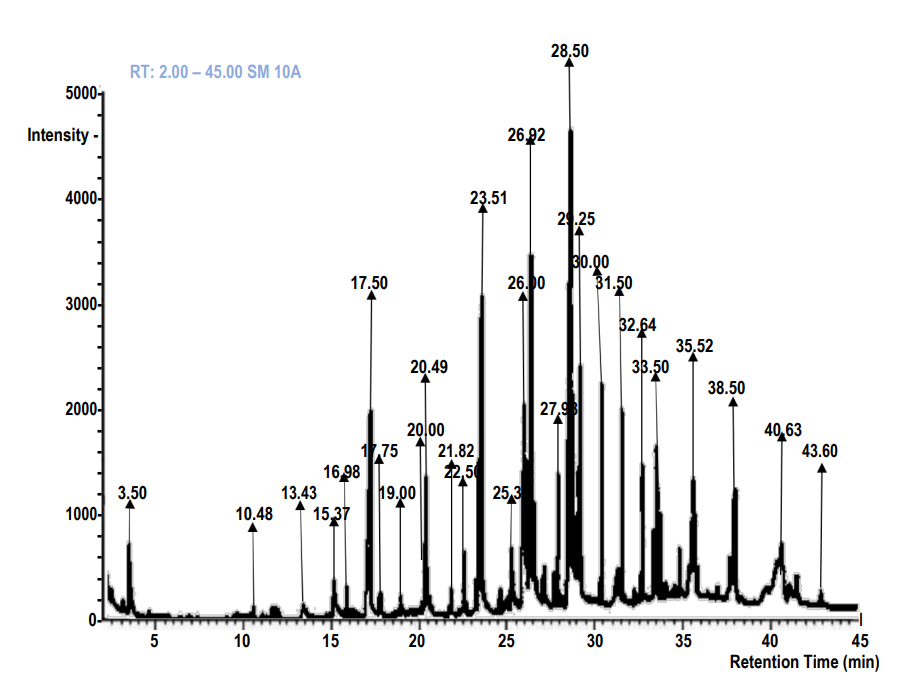
Global food security is seriously threatened by arsenic pollution in agricultural systems, particularly for leguminous crops like mungbean (Vigna radiata L.), which are highly susceptible to heavy metal poisoning.  This work uses advanced gas chromatography-mass spectrometry (GC-MS) profiling to investigate how cerium oxide nanoparticles (nanoceria) can help reverse the metabolic disturbances caused by arsenic.  Three commercially important mungbean cultivars were examined with varying concentrations of arsenic stress (from 0 to 100 mg/L) and nanoceria (100 mg/L) applied to their leaves.  Comparing the treated controls to those under arsenic stress, it was observed that the application of nanoceria markedly enhanced the production of important stress-responsive metabolites: D-mannose increased by 58%, oleic acid increased by 34%, and lycopene increased by an astounding 72%. Clear dose-dependent metabolic patterns were identified by the GC-MS analysis, and phenolic compounds and fatty acid derivatives stood out as vital markers to mitigate arsenic stress.  These findings provide insight into the dual functions of nanoceria as a metabolic regulator and antioxidant, presenting a viable nano-enabled strategy for sustainable crop production in heavy metal-contaminated regions.
Dimensions

Ahmed, S.F., Kumar, P.S., Rozbu, M.R., Chowdhury, A.T., Nuzhat, S., Rafa, N., Mahlia, T.M.I., Ong, H.C. & Mofijur, M. (2022). Heavy metal toxicity, sources, and remediation techniques for contaminated water and soil. Environmental Technology & Innovation, 25, 102114.

Bhat, A., Ravi, K., Tian, F., & Singh, B. (2024). Arsenic contamination needs serious attention: an opinion and global scenario. Pollutants, 4(2), 196-211.

Faraji, J., & Sepehri, A. (2020). Exogenous nitric oxide improves the protective effects of TiO2 nanoparticles on growth, antioxidant system, and photosynthetic performance of wheat seedlings under drought stress. Journal of Soil Science and Plant Nutrition, 20(2), 703-714.

Finnegan, P. M., & Chen, W. (2012). Arsenic toxicity: the effects on plant metabolism. Frontiers in physiology, 3, 182.

Firdaus, F., Zafeer, M. F., Waseem, M., Ullah, R., Ahmad, M., & Afzal, M. (2018). Thymoquinone alleviates arsenic induced hippocampal toxicity and mitochondrial dysfunction by modulating mPTP in Wistar rats. Biomedicine & Pharmacotherapy, 102, 1152-1160.

Gam, H.J., Woo, J.I., Injamum-Ul-Hoque, M., Ahsan, S.M., Imran, S., Sarker, A., Jeon, J., Back, M., Alam, R., Islam, N. and Kim, S. (2025). Unlocking key factors and mechanistic insight of cadmium toxicity mitigation using green-synthesized ZnO nanoparticles in soybean through advanced metabolomics. Environmental Technology & Innovation, 104422.

Gupta, A., Dubey, P., Kumar, M., Roy, A., Sharma, D., Khan, M.M., Bajpai, A.B., Shukla, R.P., Pathak, N. & Hasanuzzaman, M. (2022). Consequences of arsenic contamination on plants and mycoremediation-mediated arsenic stress tolerance for sustainable agriculture. Plants, 11(23), 3220.

Hou, D., Jia, X., Wang, L., McGrath, S.P., Zhu, Y.G., Hu, Q., Zhao, F.J., Bank, M.S., O’Connor, D. & Nriagu, J. (2025). Global soil pollution by toxic metals threatens agriculture and human health. Science, 388(6744), 316-321.

Huang, Q., Liu, Q., Lin, L., Li, F. J., Han, Y., & Song, Z. G. (2018). Reduction of arsenic toxicity in two rice cultivar seedlings by different nanoparticles. Ecotoxicology and Environmental Safety, 159, 261-271.

Islamian, J. P., & Mehrali, H. (2015). Lycopene as a carotenoid provides radioprotectant and antioxidant effects by quenching radiation-induced free radical singlet oxygen: an overview. Cell Journal (Yakhteh), 16(4), 386.

Lee, Y. Y., Cho, K. S., & Yun, J. (2025). Phytoremediaton strategies for Co-contaminated soils: overcoming challenges, enhancing efficiency, and exploring future advancements and innovations. Processes, 13(1), 132.

Lei, G. J., Sun, L., Sun, Y., Zhu, X. F., Li, G. X., & Zheng, S. J. (2020). Jasmonic acid alleviates cadmium toxicity in Arabidopsis via suppression of cadmium uptake and translocation. Journal of integrative Plant Biology, 62(2), 218-227.

Ma, L., Zeng, J., qi Zhang, R., Wang, L., Zhang, F., Zhao, X., Yuan, Y. and Li, L. (2023). Integrated transcriptomic and metabolomic analysis the variation of rice cultivars response to arsenite stress. Environmental Technology & Innovation, 31, 103207.

Majani, S.S., Singh, P., Kumari, P., Setty, P.B.S., Shivamallu, C., Srinivasa, C., Abass, K.S., Iqbal, M., Amachawadi, R.G., Stupin, V. and Silina, E. (2025). Cerium oxide nanoparticles prepared through Bio-combustion using Ficus carica as effective antioxidant, anticancer and dye degrading agent. Scientific Reports, 15(1), 30285.

Mekuria, W., Getnet, K., Noble, A., Hoanh, C. T., McCartney, M., & Langan, S. (2013). Economic valuation of organic and clay-based soil amendments in small-scale agriculture in Lao PDR. Field Crops Research, 149, 379-389.

Nair, R., & Schreinemachers, P. (2020). Global status and economic importance of mungbean. In The mungbean genome (pp. 1-8). Cham: Springer International Publishing.

Newkirk, G. M., Wu, H., Santana, I., & Giraldo, J. P. (2018). Catalytic scavenging of plant reactive oxygen species in vivo by anionic cerium oxide nanoparticles. Journal of Visualized Experiments: JoVE, (138), 58373.

Percio, F., Rubio, L., Amorim‐Silva, V., & Botella, M. A. (2025). Crucial roles of brassinosteroids in cell wall composition and structure across species: new insights and biotechnological applications. Plant, Cell & Environment, 48(3), 1751-1767.

Pietrzak, M., Skiba, E., & Wolf, W. M. (2024). Root-applied cerium oxide nanoparticles and their specific effects on plants: A review. International Journal of Molecular Sciences, 25(7), 4018.

Rajendran, S., Rathinam, V., Sharma, A., Vallinayagam, S., & Muthusamy, M. (2024). Arsenic and environment: a systematic review on arsenic sources, uptake mechanism in plants, health hazards and remediation strategies. Topics in Catalysis, 67(1), 325-341.

Rasheed, A., Li, H., Tahir, M.M., Mahmood, A., Nawaz, M., Shah, A.N., Aslam, M.T., Negm, S., Moustafa, M., Hassan, M.U. and Wu, Z., 2022. The role of nanoparticles in plant biochemical, physiological, and molecular responses under drought stress: A review. Frontiers in Plant Science, 13, 976179.

Sener, U., Uygur, R., Aktas, C., Uygur, E., Erboga, M., Balkas, G., Caglar, V., Kumral, B., Gurel, A. and Erdogan, H. (2016). Protective effects of thymoquinone against apoptosis and oxidative stress by arsenic in rat kidney. Renal failure, 38(1), 117-123.

Shaji, E., Santosh, M., Sarath, K. V., Prakash, P., Deepchand, V., & Divya, B. V. (2021). Arsenic contamination of groundwater: A global synopsis with focus on the Indian Peninsula. Geoscience frontiers, 12(3), 101079.

Sharma, P., Lakra, N., Goyal, A., Ahlawat, Y. K., Zaid, A., & Siddique, K. H. (2023). Drought and heat stress mediated activation of lipid signaling in plants: a critical review. Frontiers in Plant Science, 14, 1216835.

Shri, M., Kumar, S., Chakrabarty, D., Trivedi, P.K., Mallick, S., Misra, P., Shukla, D., Mishra, S., Srivastava, S., Tripathi, R.D. and Tuli, R. (2009). Effect of arsenic on growth, oxidative stress, and antioxidant system in rice seedlings. Ecotoxicology and environmental safety, 72(4), 1102-1110.

Srivastava, S., & Sharma, Y. K. (2014). Arsenic induced changes in growth and metabolism of black gram seedlings (Vigna mungo L.) and the role of phosphate as an ameliorating agent. Environmental Processes, 1(4), 431-445.

Su, Q., Du, Z., Huang, X., Hassan, M. U., & Altihani, F. A. (2025). Managing Arsenic Pollution from Soil–Plant Systems: Insights into the Role of Biochar. Plants, 14(10), 1553.

Talukdar, D. (2014). Arsenic-induced oxidative stress and its reversal by thiourea in mung bean (Vigna radiata (L.) Wilczek.) genotype. Cenralt European Journal of Experimental Biology, 3, 13-18.

Van Nguyen, D., Nguyen, H.M., Le, N.T., Nguyen, K.H., Nguyen, H.T., Le, H.M., Nguyen, A.T., Dinh, N.T.T., Hoang, S.A. and Van Ha, C., 2022. Copper nanoparticle application enhances plant growth and grain yield in maize under drought stress conditions. Journal of Plant Growth Regulation, 41(1), 364-375.

Walkey, C., Das, S., Seal, S., Erlichman, J., Heckman, K., Ghibelli, L., Traversa, E., McGinnis, J.F. and Self, W.T. (2015). Catalytic properties and biomedical applications of cerium oxide nanoparticles. Environmental Science: Nano, 2(1), 33-53.

Wang, Y., Chen, S., Deng, C., Shi, X., Cota-Ruiz, K., White, J.C., Zhao, L. and Gardea-Torresdey, J.L. (2021). Metabolomic analysis reveals dose-dependent alteration of maize (Zea mays L.) metabolites and mineral nutrient profiles upon exposure to zerovalent iron nanoparticles. NanoImpact, 23, 100336.

Wu, H., Tito, N., & Giraldo, J. P. (2017). Anionic cerium oxide nanoparticles protect plant photosynthesis from abiotic stress by scavenging reactive oxygen species. ACS nano, 11(11), 11283-11297.

Zhang, H., Dong, J., Zhao, X., Zhang, Y., Ren, J., Xing, L., Jiang, C., Wang, X., Wang, J., Zhao, S. and Yu, H., 2019. Research progress in membrane lipid metabolism and molecular mechanism in peanut cold tolerance. Frontiers in Plant Science, 10, p.838.

Zhao, F. J., Ma, J. F., Meharg, A. A., & McGrath, S. P. (2009). Arsenic uptake and metabolism in plants. New Phytologist, 181(4), 777-794.

GC-MS Chromatogram of Mungbean as Influenced by 100 mg/L Nanoceria Particle Under Arsenic Stress

Published

30-11-2025

How to Cite

Okunlola, G., Olatunji, O., Adeosun, I., Adebisi, S., Jimoh, M., Folorunso, S., & Mustafa, A. (2025). FOLIAR APPLICATION OF NANOCERIA ENHANCES ARSENIC STRESS TOLERANCE BY MODULATING THE METABOLITES OF THREE VARIETIES OF MUNGBEAN (VIGNA RADIATA L). FUDMA JOURNAL OF SCIENCES, 9(12), 254-261. https://doi.org/10.33003/fjs-2025-0912-4135

How to Cite

Okunlola, G., Olatunji, O., Adeosun, I., Adebisi, S., Jimoh, M., Folorunso, S., & Mustafa, A. (2025). FOLIAR APPLICATION OF NANOCERIA ENHANCES ARSENIC STRESS TOLERANCE BY MODULATING THE METABOLITES OF THREE VARIETIES OF MUNGBEAN (VIGNA RADIATA L). FUDMA JOURNAL OF SCIENCES, 9(12), 254-261. https://doi.org/10.33003/fjs-2025-0912-4135